Pool, Ocean, or Hot Tub: The Truth About What's Actually Destroying Your Swimsuit
Every swimsuit has a lifespan. That's just the reality. But how long that lifespan lasts — and how quickly your favorite suit fades, stretches, or falls apart — has a lot to do with where you're wearing it. Chlorinated pools, salty ocean water, relentless UV rays, and steamy hot tubs each interact with swimwear fabrics in very different ways, and understanding those differences can genuinely change how you shop, rotate, and care for your suits.
We dug into the chemistry and the data so you don't have to. Here's an honest, ranked breakdown of which environments are truly tough on swimwear — and which ones have maybe gotten more blame than they deserve.
How Swimwear Fabrics Actually Work
Before we get into the rankings, it helps to understand what most swimwear is made of. The vast majority of modern bathing suits rely on some blend of nylon and elastane (commonly known by the brand name Lycra or Spandex). Nylon provides structure and durability; elastane provides stretch and recovery — that snappy, form-fitting quality that makes a good suit feel like a second skin.
Both fibers are technically synthetic and engineered to handle water exposure. But "engineered to handle water" is not the same as "indestructible." Each of these fibers has specific chemical vulnerabilities, and different aquatic environments exploit those vulnerabilities in different ways.
Ranked: From Most Damaging to Least
1. Hot Tubs — The Undisputed Champion of Suit Destruction
If you take one thing away from this article, let it be this: hot tubs are absolutely brutal on swimwear, and they are wildly underestimated as a threat.
Here's why. Hot tubs combine multiple damaging factors simultaneously. The water temperature is significantly higher than a pool or ocean — typically between 100°F and 104°F — and heat is one of the primary accelerants of fabric degradation. Elastane fibers begin to break down noticeably above 85°F, losing their stretch recovery and becoming permanently deformed.
But that's not all. Hot tubs are chemically aggressive environments. They require higher concentrations of chlorine than pools (because the warm water depletes sanitizing chemicals faster), and they're often treated with bromine as well. Both chemicals attack the molecular structure of nylon and elastane over time, causing fibers to weaken, colors to fade, and fabric to lose its shape.
The combination of heat plus elevated chemical concentration plus prolonged soaking time makes hot tubs the single most damaging environment for swimwear. If you're a hot tub regular, designate a specific "hot tub suit" — ideally an older one — and keep your nicer pieces far away.
2. Chlorinated Pools — Damaging, But Manageable
Chlorine's reputation as a swimsuit killer is well-earned, but it's also a bit overstated when you factor in how most recreational swimmers actually use pools. Yes, chlorine (sodium hypochlorite) is a strong oxidizing agent that degrades elastane fibers and causes color fading over time. The science is real.
But the degree of damage depends heavily on two things: chlorine concentration and exposure duration. Competitive swimmers who spend hours a day in the pool will see their suits deteriorate quickly — sometimes within a single season. Casual swimmers who hit the pool once or twice a week are dealing with a much slower rate of degradation.
High-pH pool water (over-chlorinated or poorly balanced) accelerates damage significantly. Conversely, well-maintained pools with properly balanced chemistry are considerably less aggressive. The practical takeaway: rinse your suit in cool, clean water immediately after every pool session. That single habit removes residual chlorine from the fibers before it continues working on the fabric out of the water.
3. UV Exposure — The Slow, Silent Fader
Sunlight doesn't get nearly enough credit as a suit-damager, probably because its effects are gradual rather than sudden. But UV radiation is relentless, and it works on swimwear even when you're just lying on the beach rather than swimming.
UV rays cause a process called photodegradation, which breaks down the chemical bonds in synthetic fibers and dye molecules. The result is fading — particularly in bold, saturated colors — and a gradual weakening of the fabric structure. Dark colors and bright prints are especially vulnerable.
The tricky part is that UV damage is cumulative and invisible until it's already significant. A suit that looks fine after a summer of beach days might feel noticeably thinner and more fragile by the following year. Storing suits away from direct sunlight when not in use, and opting for UV-protective fabric blends where possible, can meaningfully slow this process.
4. Saltwater — Tough but Overhyped
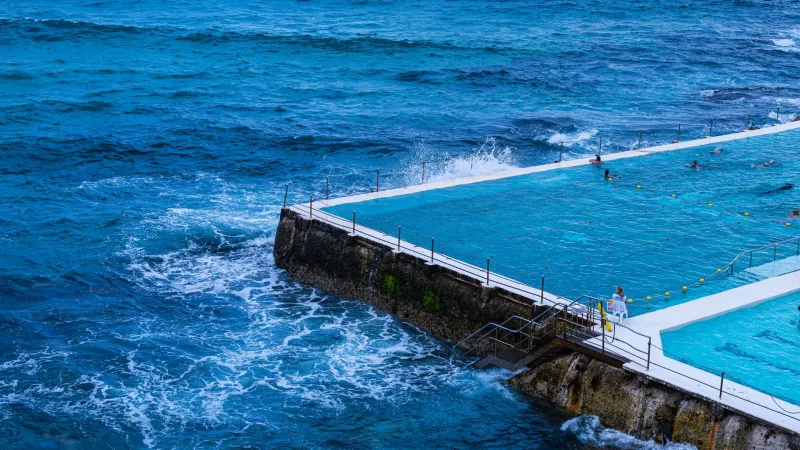
Ocean water has a reputation for being hard on swimwear, and while it's not harmless, it ranks last on this list for a reason. Salt itself is not particularly aggressive toward nylon or elastane at the concentrations found in seawater. The primary concern with saltwater is that salt crystals can remain embedded in fabric after the water evaporates, causing abrasion and gradual fiber breakdown over time.
The fix is simple and effective: rinse your suit thoroughly in fresh water after every ocean swim. This removes salt before it can crystallize in the fibers. Do that consistently, and saltwater becomes one of the lower-tier threats to your swimwear.
Sand, interestingly, is often more physically damaging than the water itself — abrasive particles work into fabric weaves and create micro-tears over time. Worth keeping in mind when you're toweling off at the beach.
The Compound Effect: When Threats Stack
The real danger isn't any single environment — it's combining them without proper care. A day that starts with a pool swim, moves to beach time under direct sun, and ends in a hot tub is, from your swimsuit's perspective, an absolute nightmare. Each environment compounds the damage of the others.
Building simple habits around rinsing, drying in shade, and rotating between suits makes a significant difference in how long your pieces last. Your swimsuit is working hard for you out there — a little maintenance goes a long way.
The Bottom Line
Hot tubs win the damage crown, and it's not particularly close. Pools are legitimately tough but manageable with consistent rinsing. UV exposure is sneaky and cumulative. Saltwater, for all its fearsome reputation, is probably the least of your worries if you're rinsing regularly.
Knowing this changes how you approach your swimwear rotation — and maybe makes you a little more intentional about which suit you grab before you climb into that hot tub.